Culture and Art Center of Bishan
重庆璧山绿岛新区文化艺术中心


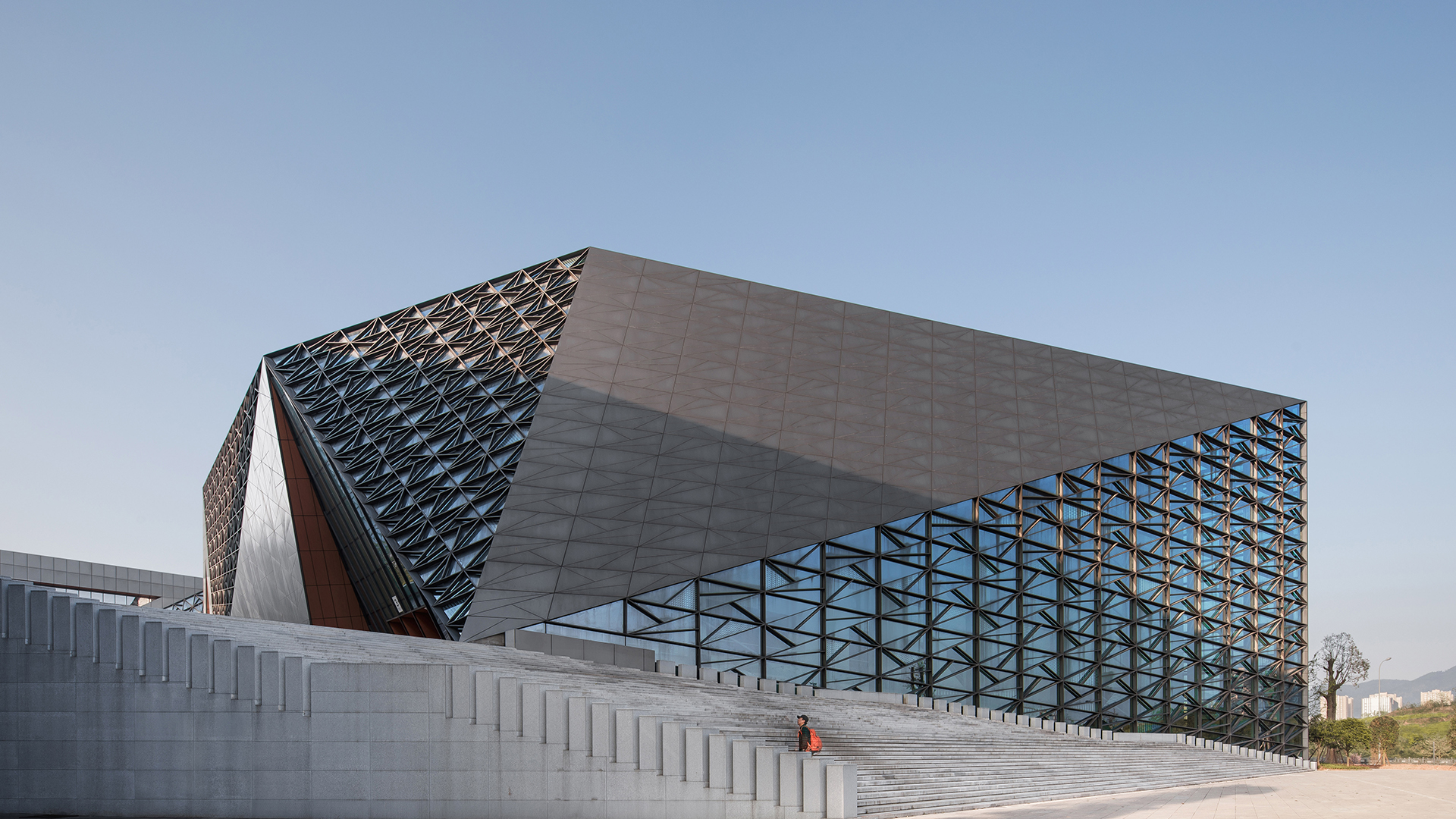
The Qianlong-era (1736–1795) Bishan County Annals – Geography records: “It was said that the four surrounding mountains resemble a jade bi (a circular ceremonial disc), and that white stone quarried from the hills is bright and lustrous like jade—hence the name ‘Bishan’ (Jade Mountain).” The Bishan Cultural and Arts Center reinterprets this poetic description of “Bishan” through an abstract architectural language, with its form also serving as a reflection of the surrounding mountain-and-water landscape.
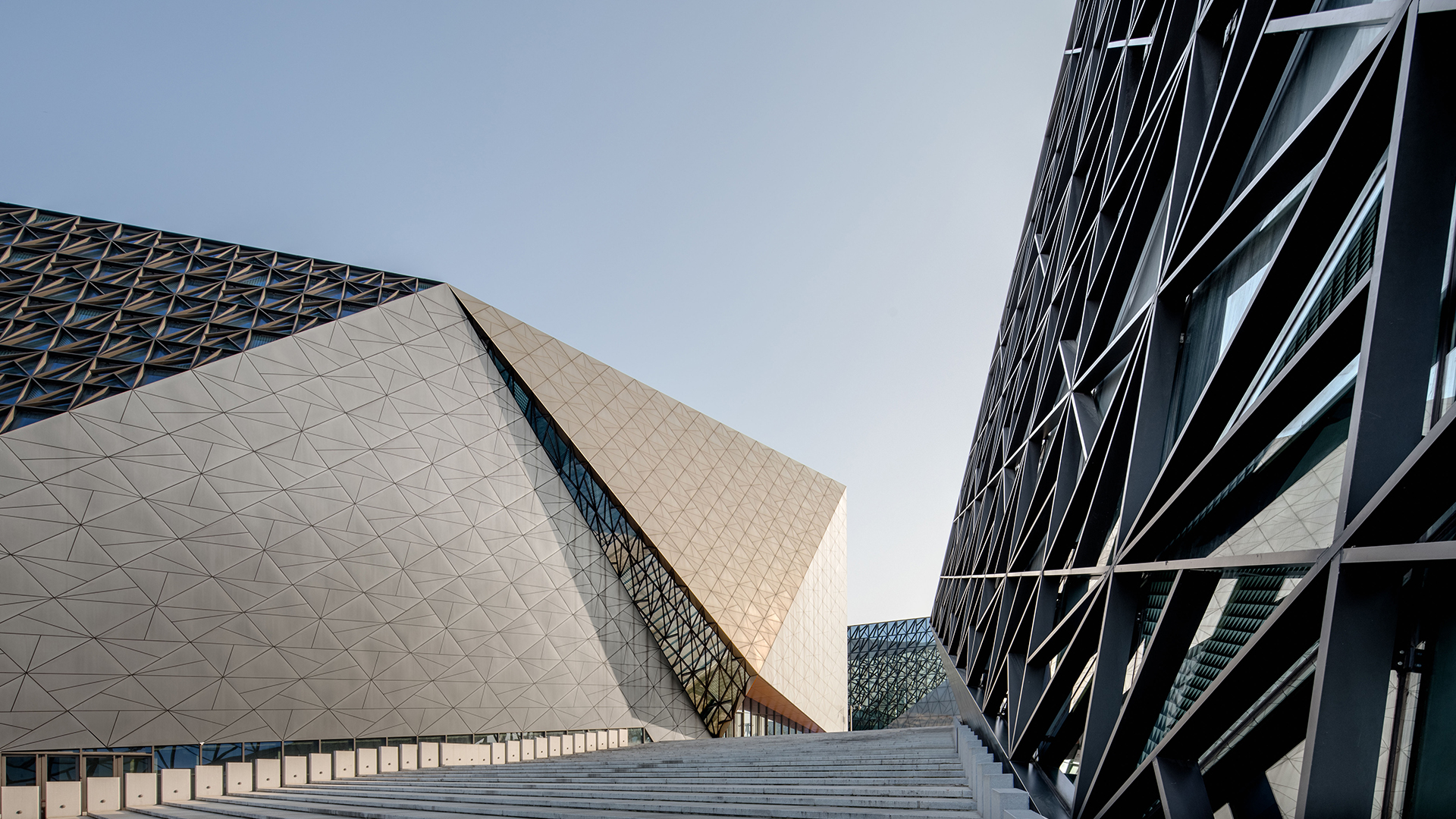
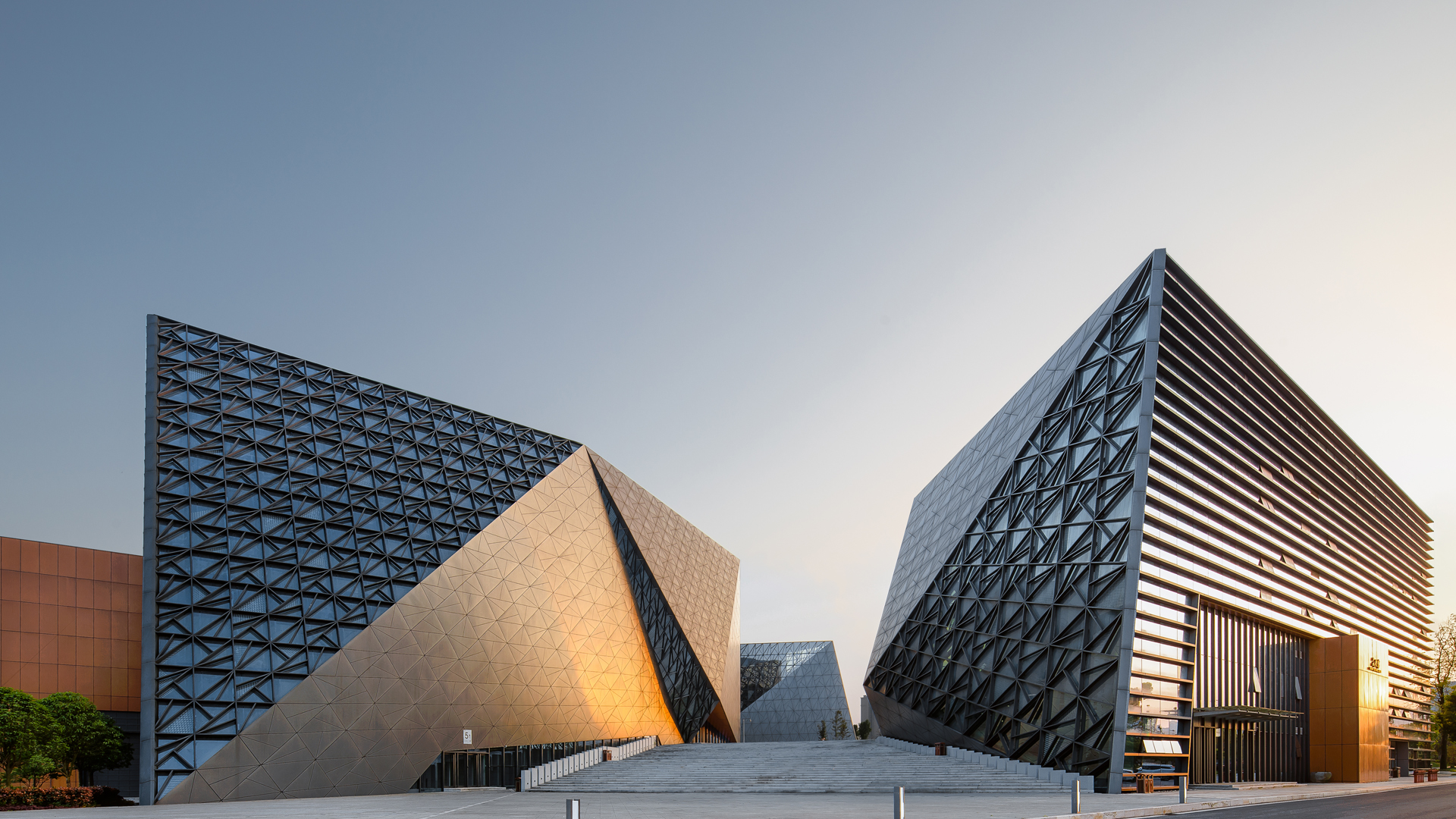
The original, ungraded site featured three hills of varying sizes standing opposite one another, with the valley between them extending outward into the surrounding terrain. Rather than merely constructing a building, we aimed to create a public space that evokes the “emptiness” of a valley. The massing follows the natural flow of the original valley, carved out from a solid volume to open pathways connecting key public spaces around the site.
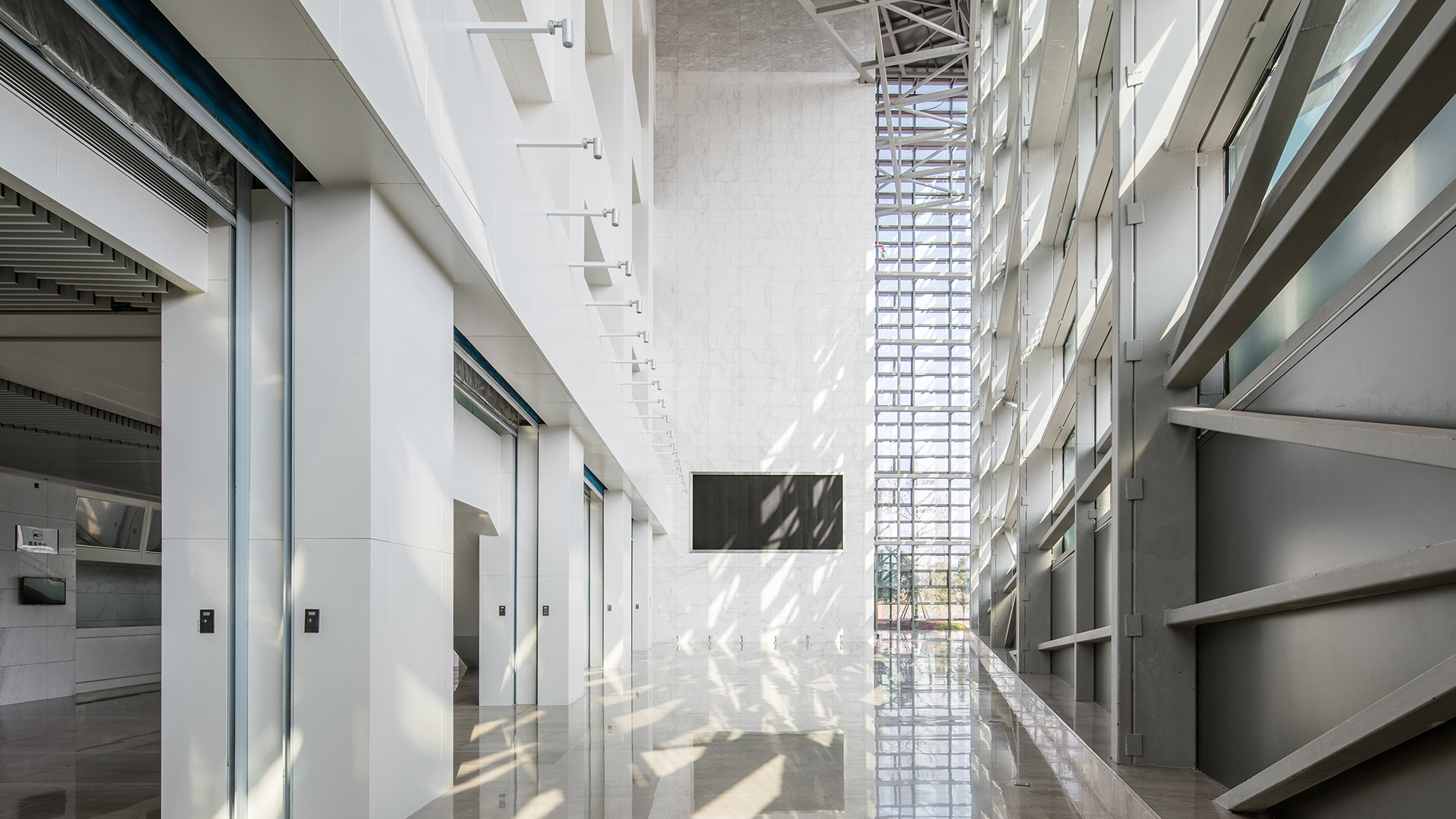
The western natural landscape extends into the building via a second-floor platform, while a shared public terrace links the three distinct volumes, forming a vibrant urban “living room.”
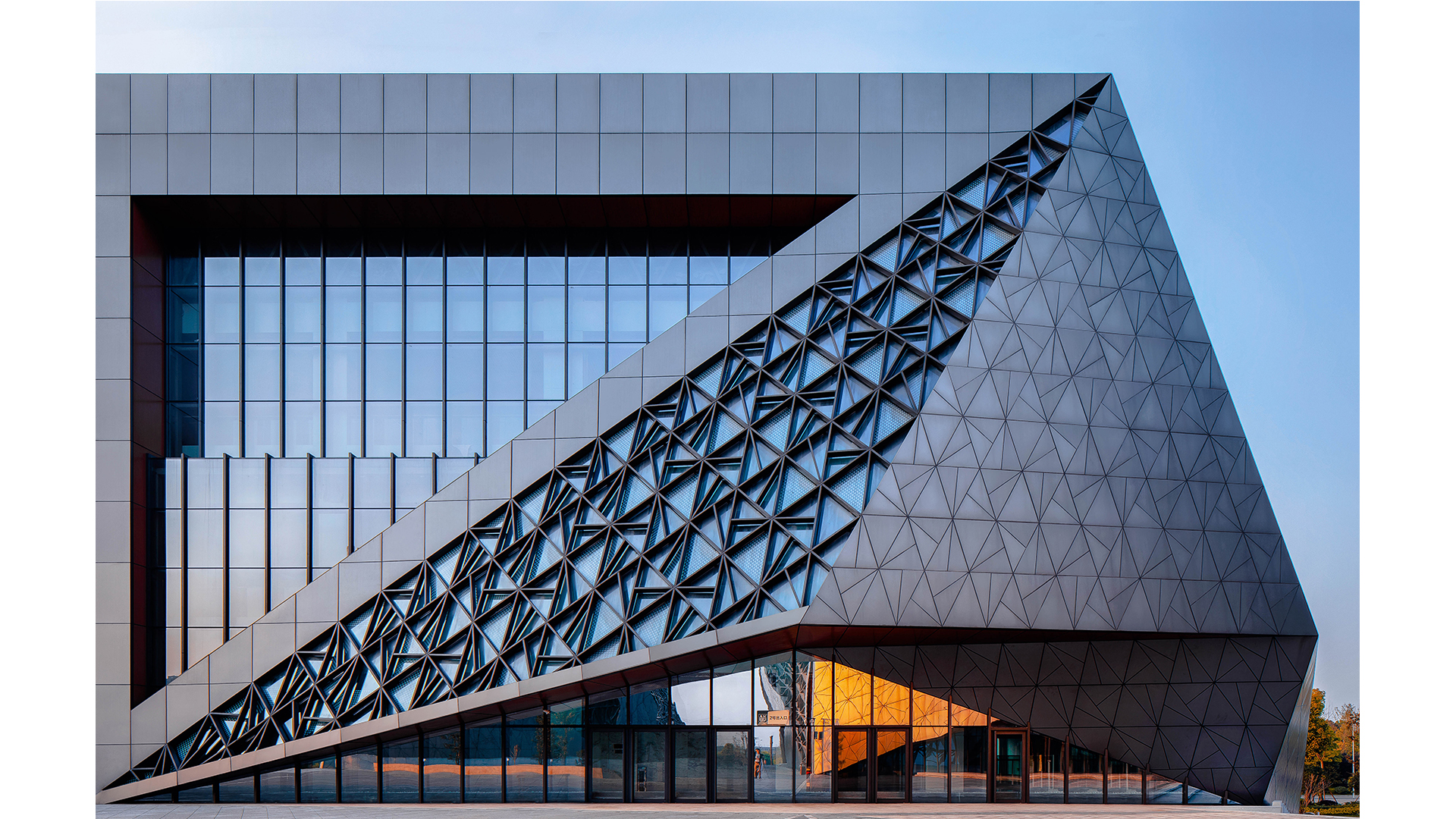
This generative logic naturally differentiates the building’s interior and exterior façades. The “outer” skin employs a combination of metal louvers and glass curtain walls. The horizontal louvers—serving as a passive energy-saving strategy—effectively mitigate solar heat gain on the east and west orientations. Their uniform, densely spaced horizontal lines lend the exterior a clean, minimalist, and contemporary appearance, which in turn accentuates the complexity and dynamism of the “inner” surfaces.
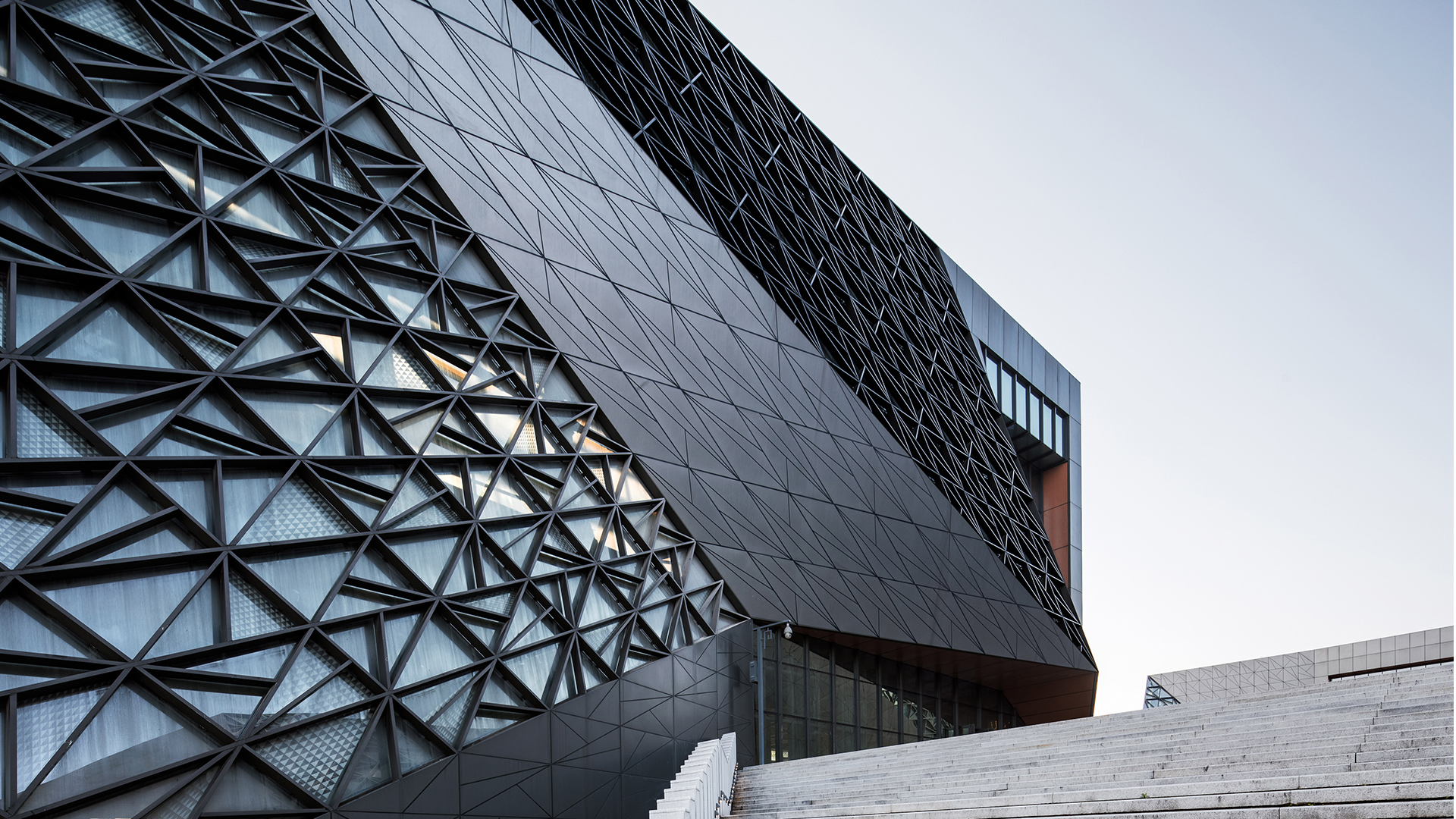
On the inward-facing canyon-like façades, glazing, metal panels, and perforated steel sheets alternate across triangular planes oriented at various angles. These diverse materials are unified by a crackle-glaze-inspired patterning reminiscent of traditional Chinese ice-crack motifs. The resulting “inner” surface acquires a crystalline texture—sparkling, translucent, and intricate—making this void-like space a visual focal point for passersby.