Kunming Workers’ Palace of Culture
昆明市工人文化宫


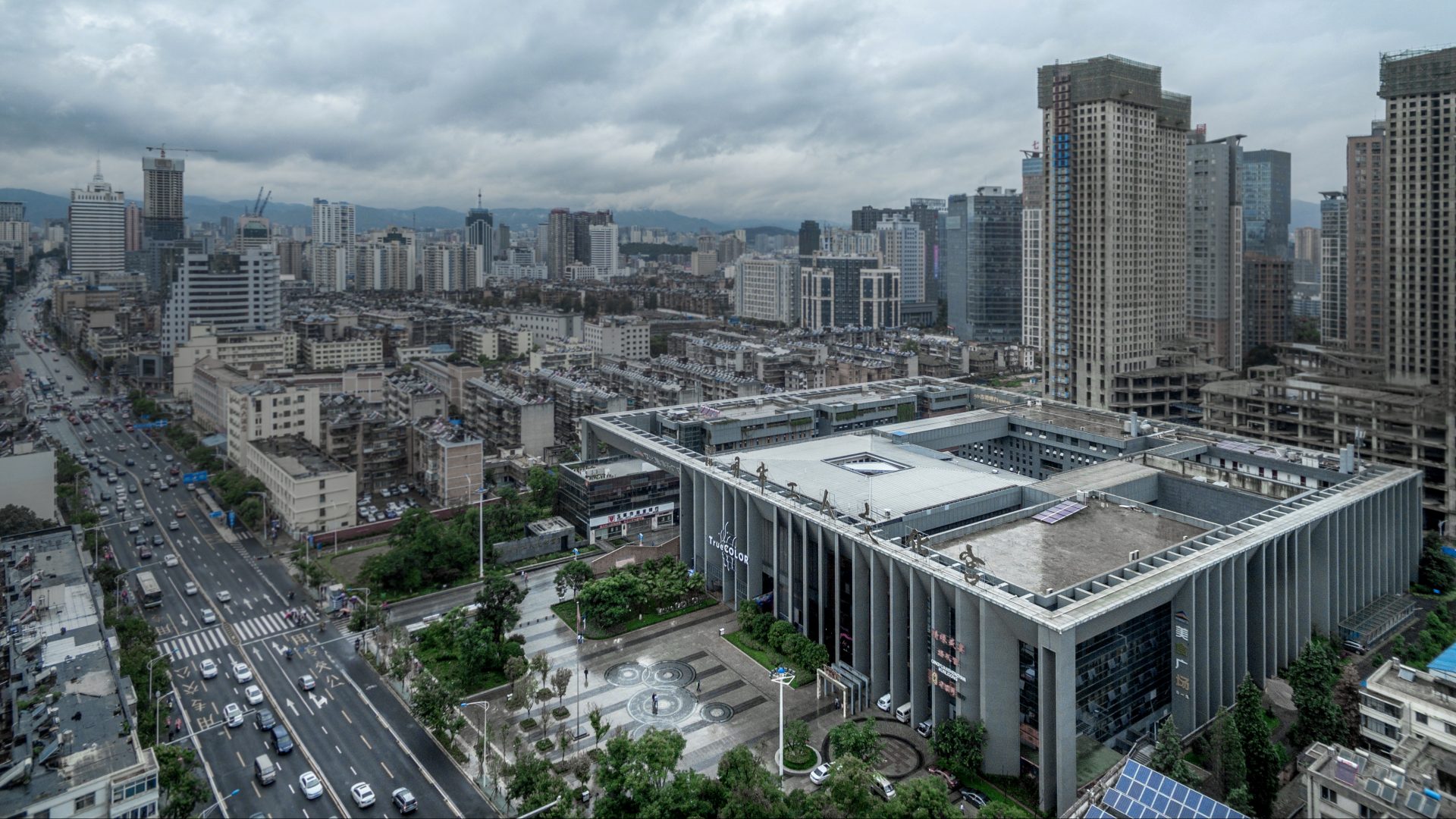
The original Kunming Workers' Cultural Palace was first built in 1952, later demolished, and reconstructed on the same site in 1982—earning the title of “Kunming’s Tallest Building” at the time. This relocation and reconstruction project, as a key component of large-scale urban renewal, carries undeniable significance in preserving memory and historical continuity.
At the outset of the design process, the site still retained portions of the former factory roads, along with several industrial buildings, dormitories, office blocks, and some urban village residential structures. Over the following years, the surrounding area is slated for extensive high-rise residential development. In response to this evolving urban context, we adopted two complementary strategies:
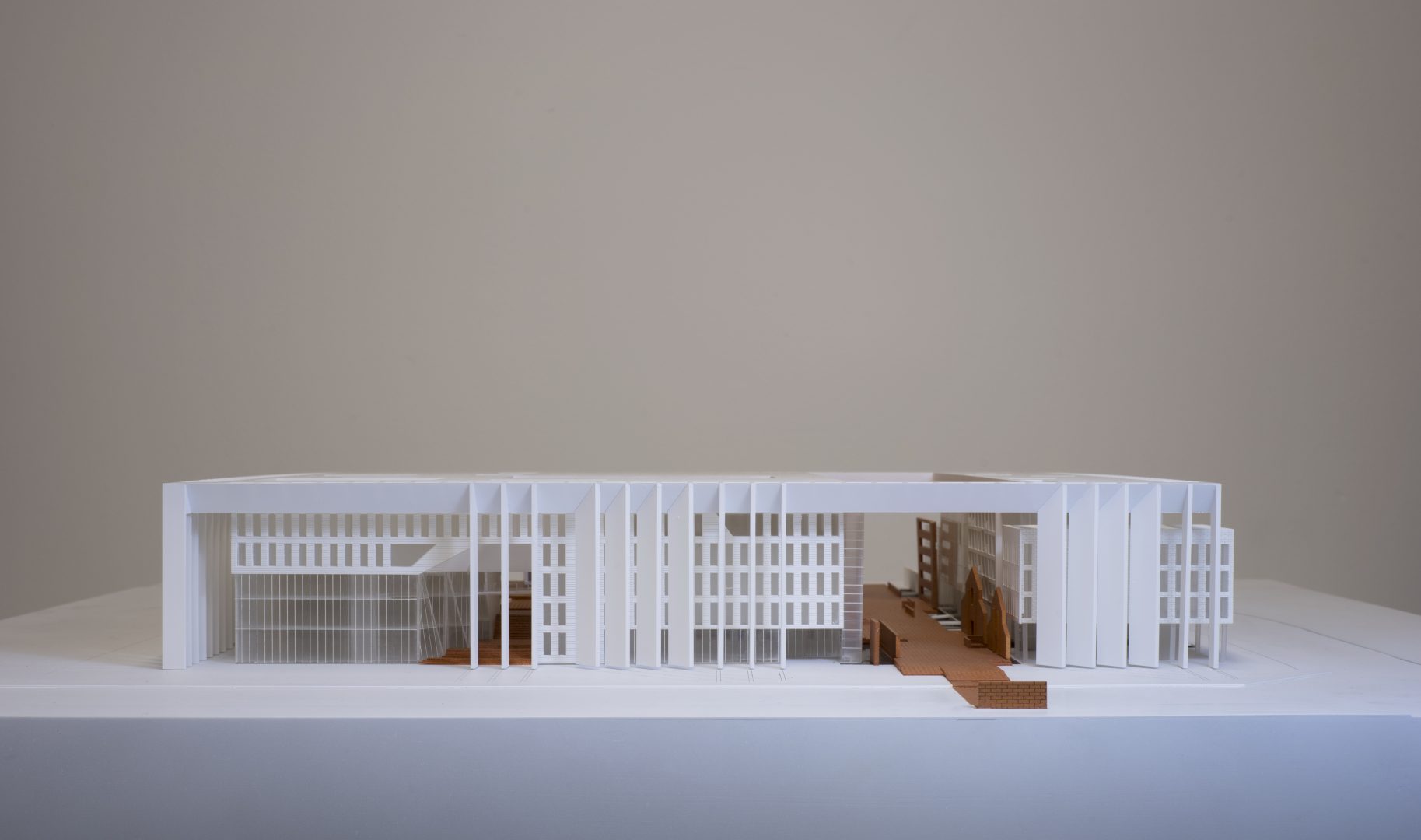
First, we employed a “grand narrative” approach—introducing a clearly defined, unusually large geometric form to establish a strong urban presence.
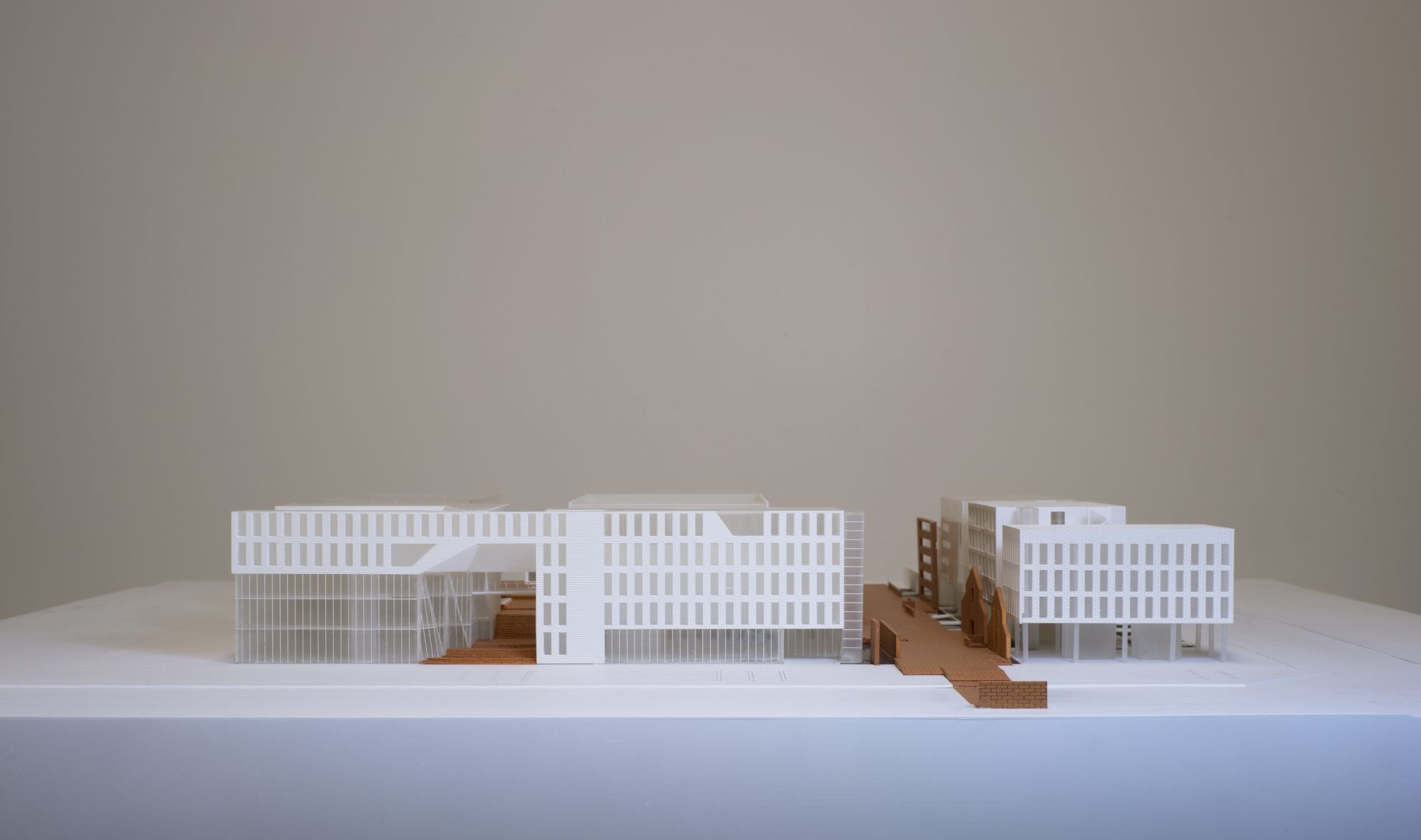
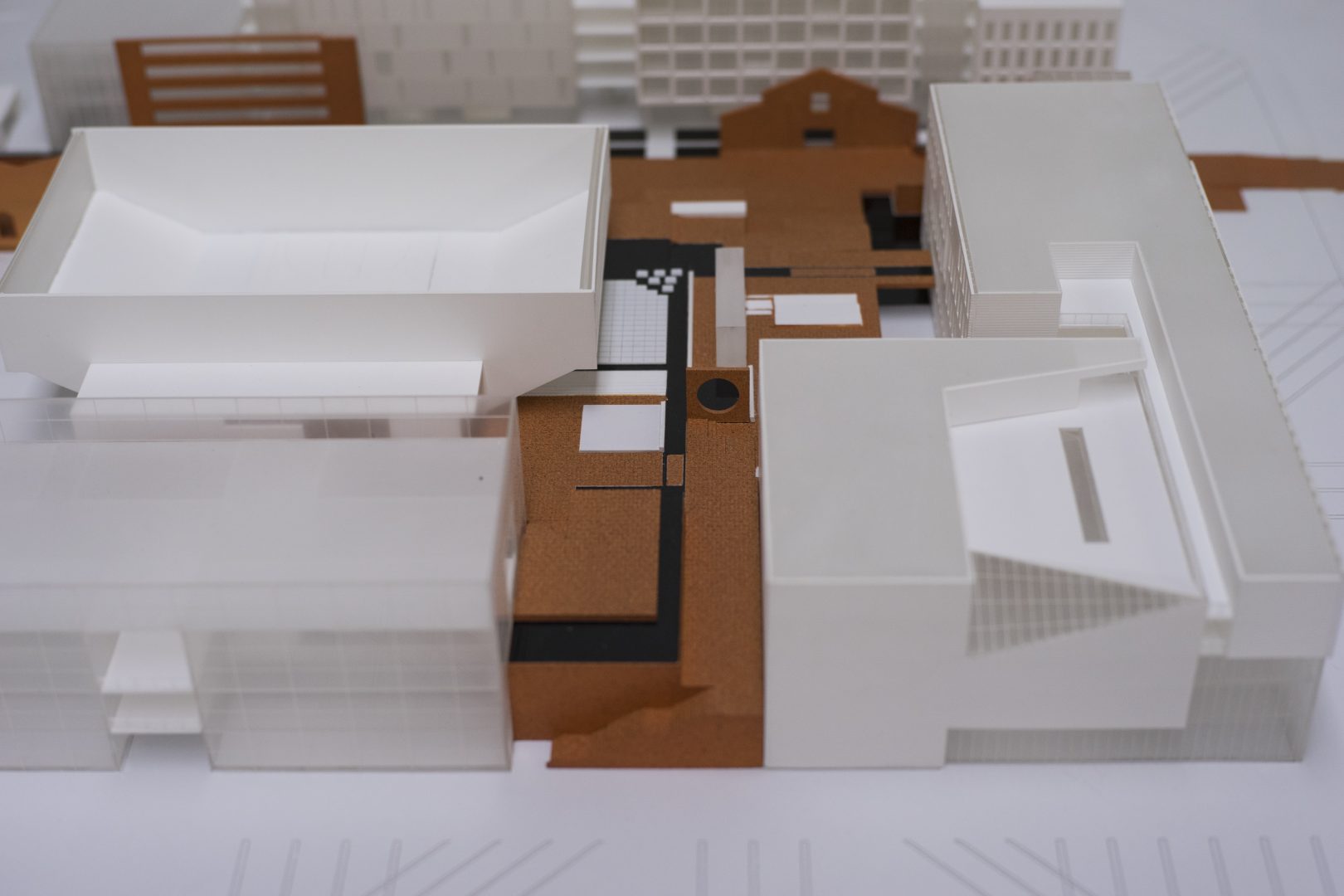
Second, we preserved the tree-lined boulevard of the former Yunnan Machine Tool Factory and the gable walls of its flanking workshops. This historic axis now serves as the primary pedestrian thoroughfare and shared central courtyard, around which the diverse functions of the Cultural Palace are organized, threading them together along a tangible line of memory.
A monumental colonnade defines the building’s striking external character: 3 meters deep, with 4-meter bays and 24-meter-high freestanding wall panels that form a permeable perimeter. Some of these panels are rotated at subtle angles—not only marking entrances to internal pathways and creating dynamic light-and-shadow effects on the façade but also providing effective solar shading.