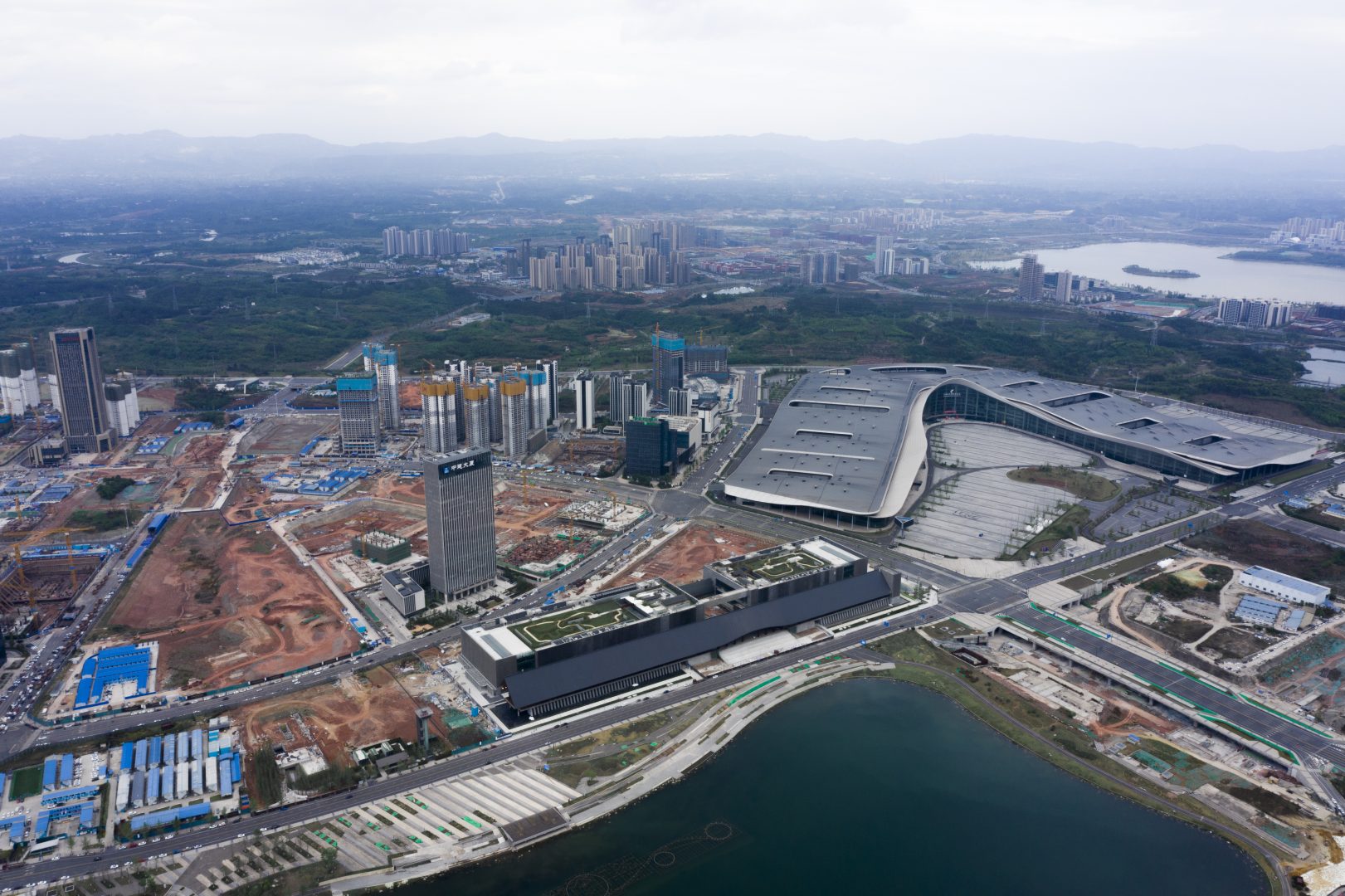
The site is enclosed by a major arterial road and a subway line, forming a narrow trapezoidal plot adjacent to Qinhuang Lake. To the south, West Expo City (Xibo City) stretches linearly along the urban thoroughfare. The design must therefore address two primary façades—one facing the city and the other oriented toward Qinhuang Lake—while also harmonizing with the urban grain of Xibo City.
Programmatically, the project must accommodate large-scale conference functions, complemented by hotel and limited commercial uses. Accordingly, the site is organized into two distinct zones: a conference block adjacent to Qinhuang Lake and a hotel block fronting Jiangsu Road. Between them, a central plaza opens a visual corridor linking the CBD’s green axis with Xibo City’s main square, extending the latter’s linear public space seamlessly into the project.
Urban-facing functions—such as the hotel and retail—engage in dialogue with the city, while the lakeside presents a horizontally extended, monumental, and ceremonial interface. The building appears as if it captures a segment of the Chengdu Plain’s continuous horizon, jointly establishing a regional landmark with the 677-meter supertall tower at the CBD core.
Inspired by traditional Chengdu courtyard houses—characterized by open, flexible layouts connected through eaves galleries and colonnades—the design features a 424-meter-long elevated eaves gallery along the lake. Cantilevered over the water with deep overhangs, this gallery becomes a multi-functional, publicly accessible “covered space” beneath the roof.
Attendees enter through the main lobby under this eaves gallery, proceed through an open landscaped corridor, cross a parallel “flower court”—a linear courtyard—and then access individual conference halls via sky bridges. This sequence—“eaves gallery” → “flower court” → “main hall”—creates a layered sense of ceremony while efficiently channeling large flows of people. Borrowing scenery from Qinhuang Lake, the landscape system abstractly integrates quintessential Chengdu elements: western Sichuan linpan (rural settlements), stone slabs, bamboo, wood, and ginkgo trees, transforming the lake into an integral part of the architectural experience.
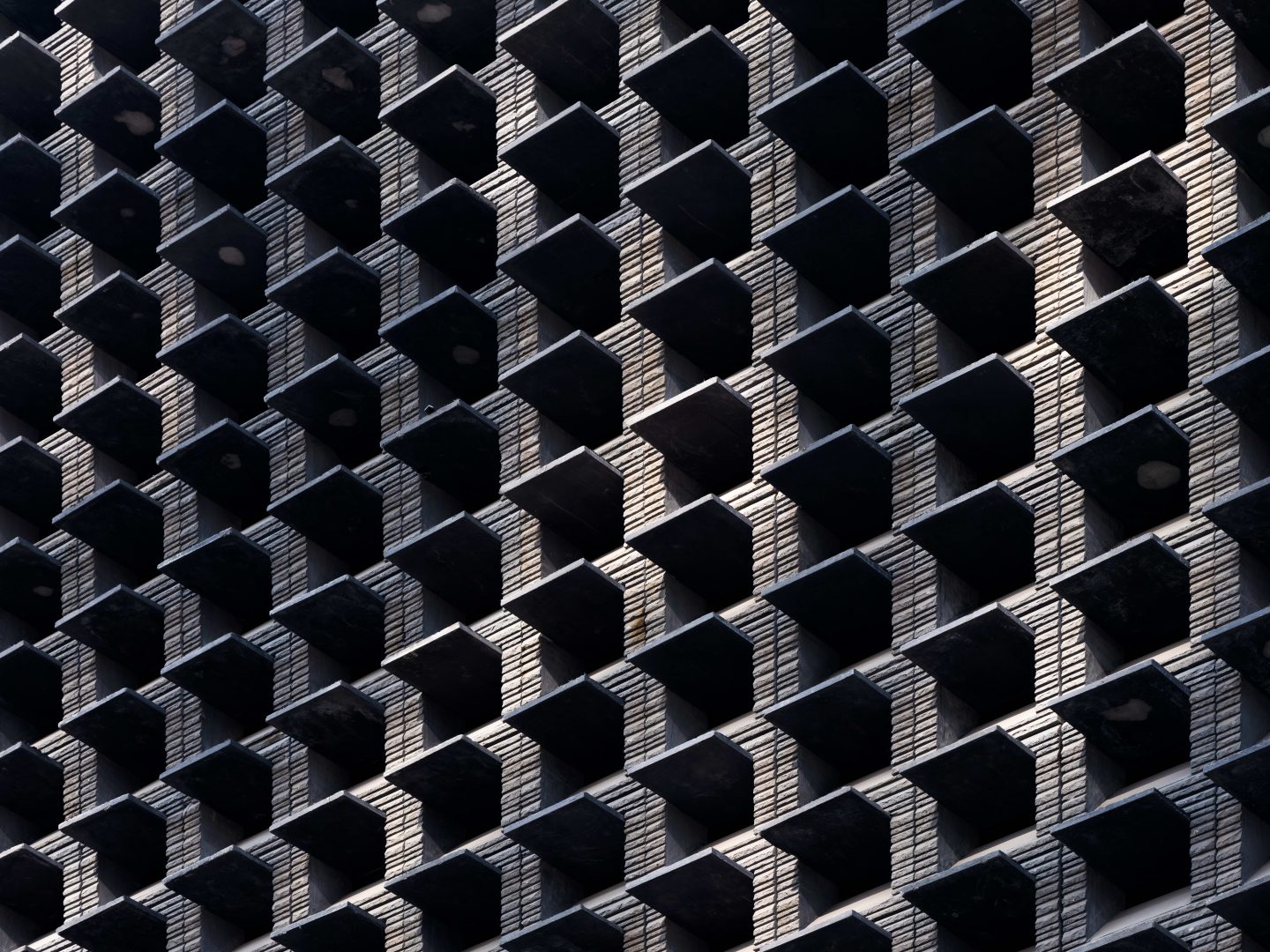
The roof structure draws from the traditional Chinese “post-and-lintel” (tailiang) system but is reinterpreted through abstraction and transformation. The extraordinary length of the building conveys a distinctly modern scale. At its center, the roof gently undulates like ripples on water, framing a unique view of Qinhuang Lake—a deliberate “picture window” within the landscape.